About Stories from the Sound
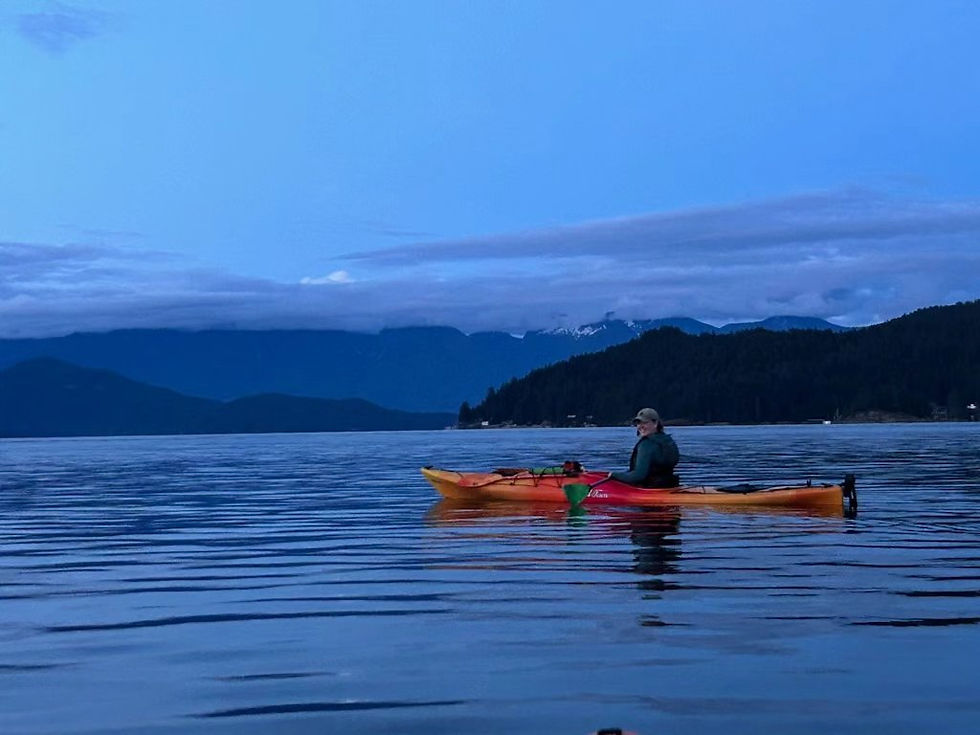
When I started working as a kayak guide in Atl’ka7tsem, my favourite tour to run was the bioluminescence tours. Taking folks out in the night, headlamps guiding us around shore bends as we sought out a place hidden from the blinding white of Vancouver to the east, or the moon directly above us. Once I deemed us far enough, I'd instruct my group to turn off the headlamps, and let the darkness enveloped us.
Silence.
And then....
Gasps of shock, laughter, as visitors would move their paddles alight with organisms that would otherwise be unseen to the naked eye. Hands dip down, a chemical reaction creating the twinkling of lights whose existence uplifts an entire ecosystem. Thirty odd years ago though, they would have been all but a weak pulse, barely flickering.
My father was born in the company town of Woodfibre located southwest from Squamish. Once the town shut down, his family was one of the last to make the move out to Squamish in the 1960s. When he grew up, he would return to Woodfibre to work in the pulp mill such was the way for any Squamish local who wasn't in logging.
One of the many jobs he had at the pulp mill before its closure in 2006, was to ride the log boons up and down the Howe Sound. While I was kayak guiding, I asked him, in those years where he too was mostly on the water, if he ever had hope for the Sound to recover.
He said he didn't. That was until one night, while riding the log boons, he saw that the logs had this outline of colour swirling around them in the dark. Upon further inspection, he realized that that faint glow was bioluminescence. That despite the years of unregulated industry that occurred here, the base of the ecosystem was still there.
That faint glow all those years ago, surrounding the logs in the night, is now vibrant against my kayak. A strong, healthy heart beating, keeping the Sound in circulation.
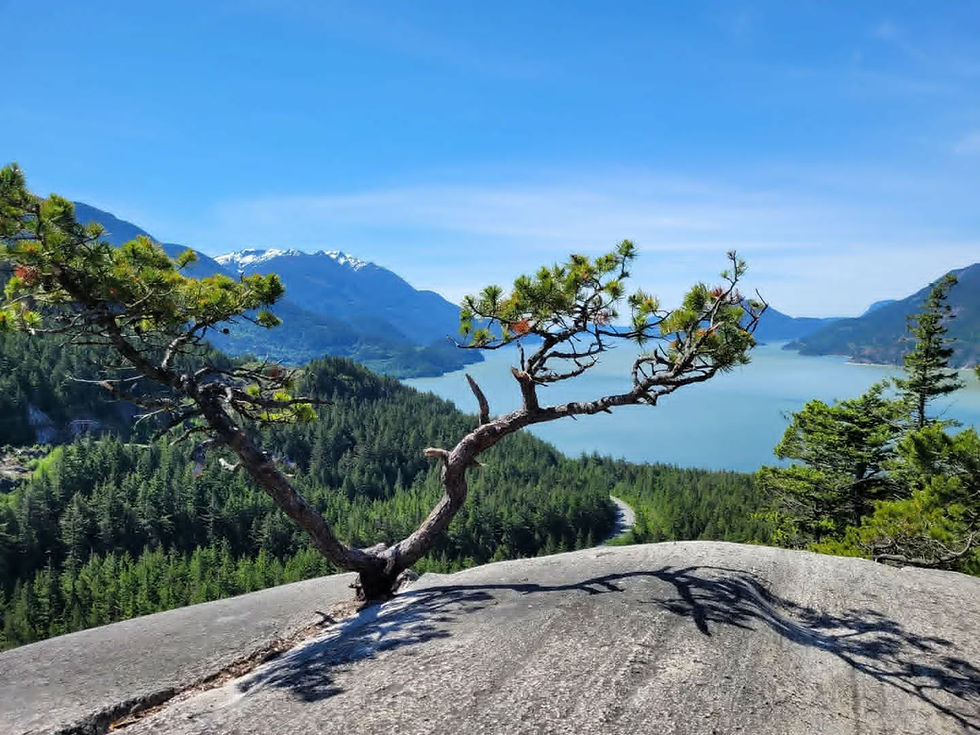
Atl’ka7tsem lives in the hearts and imaginations of its people. It's stories, its history, bringing forth a challenge that we all need to reckon with. It was described by early explorers and colonialists as "mouths of abundance", but its story became one of loss and grief just as much as it was a story of prosperity, and later, recovery.
Taking part in CPAWSBC's Young Leaders in Conservation program, each participant was to develop a conservation project. As a guide, I know that conservation cannot happen without connection. And lately, we have become more and more disconnected to the incredible world around us. I am guilty of that too, moving so fast, I barely register the beautiful place I live in, not getting to know the names of the plants and animals I share it with, not understanding what the land is telling me. With this project, I hope to remedy that and encourage others to get to know their surroundings.
Thank you for taking the dive with me into its waters, for traversing its peaks, and in exploring the wonderous and delicate ecosystem that so many of us are fortunate enough to experience.
I hope these stories resonate with you and encourage you to stay curious about the world we live in.
Sincerely,
Hannah Brunn
Comments